This post is especially helpful for parents of kids in grades 3–6 who feel stuck or frustrated with fractions.
Fractions are one of the hardest math concepts for kids to grasp — and one of the most frustrating for parents to help with. I see this every year in the classroom.
The good news is that fractions don’t have to be abstract or stressful. When kids can touch, move, and see fractions, things finally start to click. Sometimes just a few measuring cups and the sink can be enough to get them exploring, but when you need to go beyond that…
Below are the fraction tools and games I’ve found to be the most effective for helping kids build real understanding — without tears or overwhelm.
Here are 5 simple tools I recommend to help your child build confidence with fractions — and even enjoy the process!
1. Fraction Circles
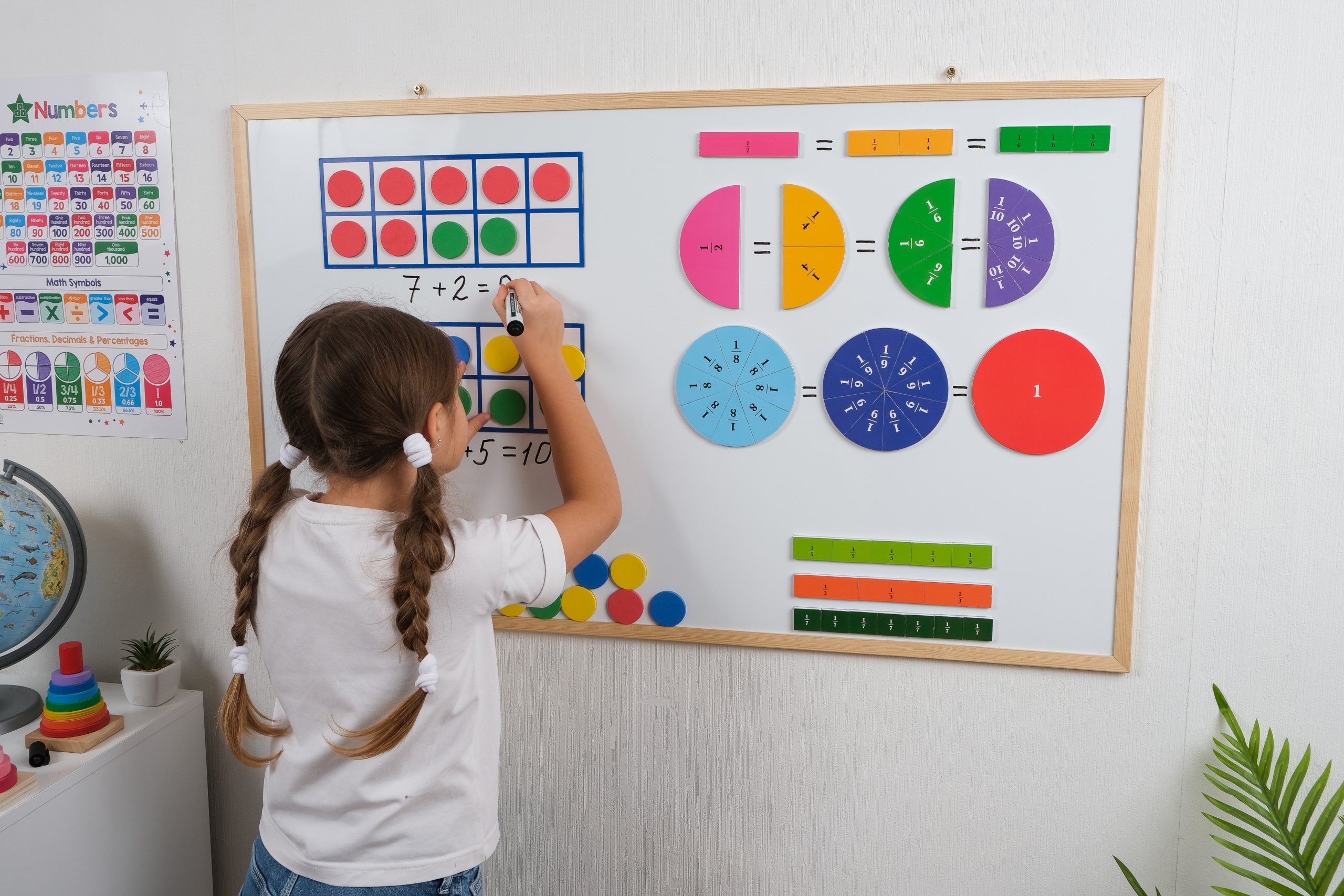
Fractions are easier to understand when kids can see them. Fraction circles are colorful, hands-on pieces that show how wholes break into parts. Kids can physically move the pieces around to see that 1/2 is the same as 2/4, or that four 1/8 pieces equal 1/2.

This hands-on movement helps kids build number sense before they ever have to memorize rules.
2. Fraction Bars / Tiles
Fraction bars (also called tiles) let kids line up fractions side by side to compare them. This is perfect for tricky concepts like deciding whether 1/3 is larger or smaller than 1/4. With fraction bars, the answer becomes obvious at a glance.
This visual comparison removes guesswork and helps kids reason instead of guess.
3. Fun Fraction Card Game
Learning through play builds confidence and makes math less intimidating. A fraction card game (like “Pizza Fraction Fun” or a matching card deck) turns practice into a game your child will want to play again and again.
Playing with fractions in a low-pressure way helps you spot misconceptions early and builds confidence without the fear of getting something “wrong.”
4. Fraction Workbook (Grade-Appropriate)
Sometimes, kids just need extra practice. A well-structured workbook gives them step-by-step activities with clear explanations. Look for grade-level books so your child doesn’t feel overwhelmed.
Two great options:
Structured practice helps kids apply what they’ve learned with hands-on tools and builds fluency over time without overwhelming them.
5. Fraction App for Extra Practice
If your child enjoys screen time, make it count with a math app that focuses on fractions. Apps like SplashLearn, Prodigy, or Brighterly turn practice into interactive challenges. Kids get instant feedback and motivation to keep improving
Interactive feedback keeps kids engaged and allows them to practice at their own pace, which is especially helpful for students who need repetition without pressure.
Final Thoughts
Fractions don’t have to cause stress for you or your child. With just a few simple tools — some hands-on manipulatives, a workbook, or even a fun game — you can make a big difference in your child’s understanding and confidence.
Start with one tool from this list and build from there. You’ll be amazed how quickly fractions begin to click when learning feels fun and interactive.
Frequently Asked Questions About Teaching Fractions at Home
Q: Do I need to buy all of these tools for my child?
A: Not at all! Even one resource, like fraction circles or a workbook, can make a big difference. Start small, see how your child responds, and add more if needed.
Q: What age or grade should kids start learning fractions?
A: Most children begin exploring fractions in 3rd grade, but you can introduce simple ideas earlier (like sharing pizza or cutting fruit). By 4th–6th grade, strong fraction skills are essential for more advanced math. I personally see students consistently in 7th grade that still fear them.
Q: My child hates math. How do I keep them motivated?
A: Make it fun! Use games and hands-on tools first instead of worksheets. Kids are more likely to stay engaged when math feels like play. Creating stronger understanding also helps with fear. When they play with math enough to actually understand the “why” in the procedures, math becomes so much more enjoyable.
Q: Can I use free online resources instead of buying tools?
A: Yes! There are many free fraction printables and games online. However, hands-on manipulatives and structured workbooks often provide a clearer, more consistent learning experience.